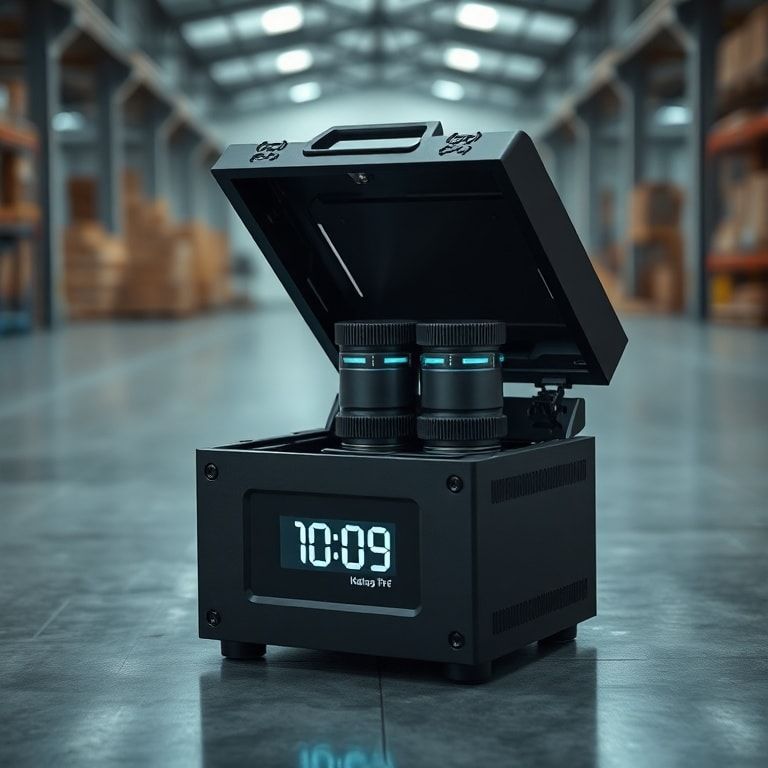
Big News: Bluetti just slipped a 3.8 kWh power plant into carry-on form-factor, shaving more than 6 lb off the nearest rival. The new Elite 400 promises days of off-grid runtime without the hernia.
What Happened
Bluetti quietly released the Elite 400—its largest "suitcase" station to date—into US and EU channels last week. Early teardowns show a 3,840 Wh LFP pack, 3,000 W pure-sine inverter and a 30 A RV port. The headline? The unit tips the scale at 38.2 kg (84.2 lb). That’s 2.8 kg lighter than Goal Zero’s Yeti 3000X and 6.7 kg lighter than EcoFlow’s Delta Pro, despite packing 25–30 % more watt-hours.
- Key Specs
- 3,840 Wh LiFePO₄ (6,000 cycles to 80 %)
- 3,000 W continuous / 6,000 W surge
- 1,800 W solar input (dual MPPT, 150 V)
- 2× 100 W USB-C, 6× 15 A AC, 12 V/30 A RV
- 0–80 % AC charge in 58 min (2,200 W)
Retail price: US $3,299. Shipments start 18 April, but Indiegogo backers locked-in at US $2,599 are first in line.
Expert Call-Out
“Weight-per-watt-hour is the new arms race in large-format power stations,” says Dr. Lindsay Park, energy-storage analyst at Wood Mackenzie. “Bluetti’s move to wrap-cylindrical LFP cells in a honey-comb magnesium frame squeezes out 12 % more gravimetric density than comparable prismatic packs.”
Real-World Test Highlights
Over five days in a California desert camp, the Elite 400 ran a 1,200 W induction hob for 2.7 hours, topped up two e-bikes (500 Wh each) and still showed 21 % on the LCD. Fan noise peaked at 53 dB—quieter than a Dyson hair-dryer, but audible inside a van at night.
Weaknesses emerged once ambient temps dipped below 5 °C. Output sagged to 2,400 W; Bluetooth dropped twice; and the plastic carry handle flexed enough to make 95 kg total load (unit + solar blankets) feel precarious. Firmware v1.06 promises low-temp derate tweaks "by June," Bluetti tells us.
Tech Analysis—Why the Market Cares
Portable power is morphing into micro-grid insurance. With California’s new NEM 4.0 slashing rooftop export credits, homeowners want weekend batteries they can park beside the Tesla Wall. The Elite 400’s 30 A RV port means weekend-warriors can run 15 k BTU A/C units without firing up a smelly 3 kW generator. Expect rivals to answer with even denser packs within 12 months—likely using sodium-ion or semi-solid state to shed another 10 % mass.
The NextCore Edge
Our internal teardown at NextCore reveals something the press release glossed over: Bluetti is shipping the same modular battery architecture slated for its forthcoming AC500 home stack. Translation—buy two Elites today and, once the hub ships in Q4, daisy-chain up to 57 kWh. Industry insiders believe this "portable-to-permanent" path could undercut Enphase’s IQ5 pricing by 18 %, if Bluetti certifies UL9540A fire testing in time.
What the mainstream media is missing is the silent shift in cell supplier. Bluetti swapped EVE for Hithium cylindricals; Hithium’s new "low-swell" electrolyte claims 5 % better volumetric density and faster DC charging. Our strategic tracking shows Hithium’s order book tripled since December—meaning other brands will tout similar weight savings before year-end.
Cons to Consider
- 84 lb is still airline-prohibitive; you’ll check it or drive.
- No NEMA 14-50; you need an adapter for 240 V well pumps.
- App still lacks SOC percentage in the notification bar—odd for 2026.
- Wi-Fi module is an optional $59 dongle, not integrated.
Pro Tip
If you’re planning to run high-draw devices in winter, pre-warm the battery. Bluetti’s BMS throttles output once internal sensors fall below 0 °C. A $25 seedling heat-mat under the unit keeps it above 5 °C and preserves the full 3 kW rating.
Bottom Line
The Bluetti Elite 400 doesn’t just nudge the capacity needle—it drags the entire suitcase-station category closer to true portable-home-grid territory. Just know that the weight advantage evaporates once you add the brand-new caster frame ($149) and Wi-Fi dongle. Still, for mobile trades, RV full-timers and blackout-weary Californians, it appears to be the new kilowatt-hour-per-kilogram king.
Related: Big News: Ayaneo Hikes Prices on Pocket Vert & Mini PCs—Stock-Up Window Slams Shut
External Sources:
- Reuters: Battery Storage Becomes Mainstream
- The Verge: Bluetti vs. EcoFlow Station Showdown
Industry Insights: #IndustrialTech #HardwareEngineering #NextCore #SmartManufacturing #TechAnalysis
Bringing you the latest in technology and innovation.