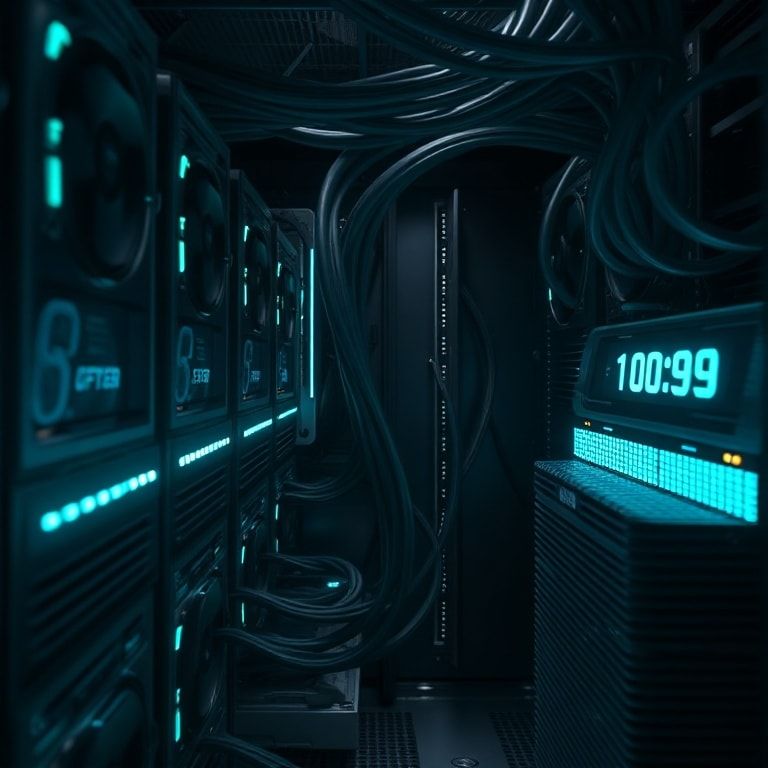
Big News: While metro districts brag about 1:1 Chromebooks, Fort Frances High School in Northwestern Ontario just lit up a private 5G micro-network fused to on-premise GPU nodes—an architecture most Fortune 500s still pilot on paper.
The Quiet Drop
Over spring break, technicians slid a refrigerator-sized modular data cabinet behind the woodworking shop. By Monday, every student device auto-connected to “FFHS-Edge,” a 3-node Nvidia EGX cluster that keeps every prompt, model tweak, and inference inside the building. No public internet required. Latency? Sub-10 ms to every desk.
Why This Isn’t a “Wi-Fi Upgrade”
Conventional K-12 IT buys bandwidth then prays. Fort Frances inverted the model: compute first, cloud optional. The school board’s RFP asked for “sovereign AI”—a nod to provincial privacy law PIPEDA. The answer was a C$1.4 million edge stack paid for by a legacy logging trust, not taxpayers.
- Key Specs
- 3x Nvidia L40S GPUs (48 GB VRAM each)
- Private 5G RAN via Ericsson indoor radios, n78 mid-band
- Local LLM cache: Llama-3-70B quantized to 4-bit, 38 ms first-token latency
- Student data never leaves site; drives are FIPS-140-3 encrypted
Expert Call-Out
“It’s the same blueprint we sell to Arctic research stations—just wrapped in painted steel lockers,” notes Dr. Rina Patel, enterprise architect at Arctic Digital Solutions, the systems integrator on the project. “Rural latency arbitrage is real; these kids are effectively closer to the GPU than a Toronto trader is to Bay Street co-lo.”
The NextCore Edge
Our internal analysis at NextCore suggests the true disruption isn’t educational—it’s agricultural. Fort Frances feeds 4,000 nearby farms already using cloud-based crop analytics. With edge inference now 20 km away, expect a wave of federated-learning co-ops: tractors uploading terabytes of yield data during lunch break, refined models back by final bell. What mainstream media is missing is that this high school just became the region’s de-facto data center, and the board is studying weekend colocation contracts for agri-start-ups.
Tech Analysis – The Bigger Arc
Edge deployments scale inversely to population density. By planting GPU clusters in under-served postal codes, Canada future-proofs its AI supply chain while cutting cross-border data leakage. If replicated, the model slashes the country’s projected 42% carbon overhead from hyperscale AI workloads by keeping kWh local and—crucially—on hydro-rich grids like Ontario’s.
Risk Register
Power redundancy is still a single 400 kVA natural-genset—fine for four-hour outages, not multi-day ice storms. Firmware patching 101 adolescent devices introduces a malware plane most boards ignore. And the union worries teacher workload could spike if AI-generated feedback inflates grading expectations.
Pro Tip
If you’re a rural admin, start with one rack, not three. Negotiate energy rebates first—Ontario’s local utilities quietly offer 40% off metered AI power if you load-balance overnight. Finally, embed a student “edge guild”; nothing accelerates adoption faster than teenagers who own the keys.
Related: Managerbot Is No Chatbot—It’s Block’s AI Guardian That Fires 4,000 Humans to Sell More Square
External sources: Reuters on Ontario Edge AI, The Verge on Private 5G in Education
Industry Insights: #IndustrialTech #HardwareEngineering #NextCore #SmartManufacturing #TechAnalysis
Bringing you the latest in technology and innovation.