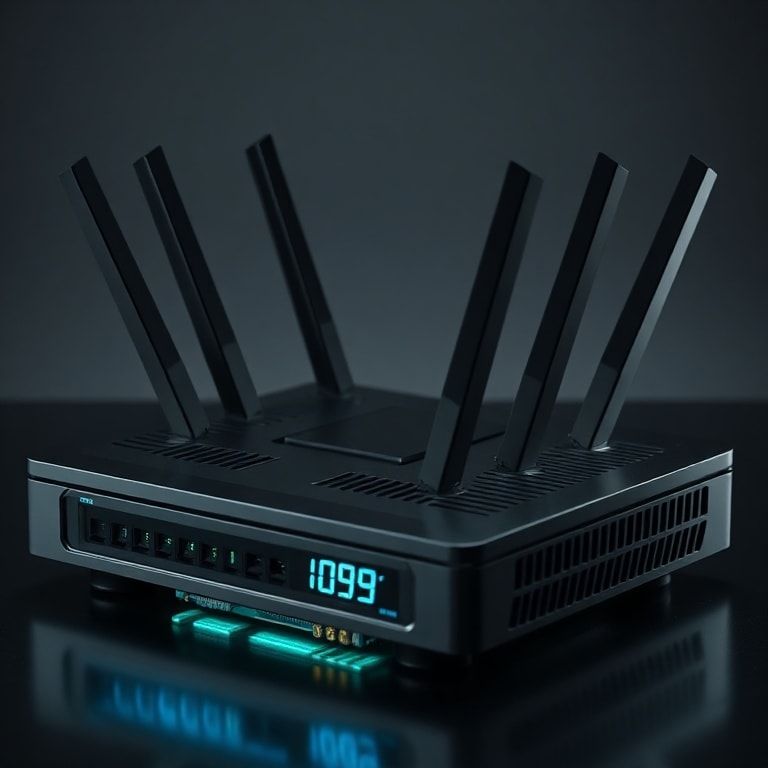
Big News: NetGuardian ONE Router Promises to End Network Chaos for Global Business
Network outages just became a board-level nightmare. NetGuardian’s new ONE series claims it can keep Fortune 500 teams online anywhere on Earth—even if three carriers collapse at once.
What Actually Happened
At Mobile World Congress Shanghai, stealth-startup-turned-enterprise-favorite NetGuardian unveiled the ONE-8000 router, a palm-sized box that bonds up to eight 5G/6G modems, LEO satellite links, and existing fiber into a single, self-healing tunnel. The promise: 99.999 % uptime for less than the annual cost of two first-class Shanghai–SFO tickets.
Early adopters include a global logistics firm whose drivers cross 42 borders a week and a pharma giant running temperature-sensitive shipments. Both pilot programs reported zero disconnects during the last three months, according to NetGuardian’s press deck.
The Tech Under the Hood
- Key Specifications
- 8 x nano-SIM trays with eSIM fallback
- Sub-6 GHz, mmWave, and L-band satellite in one radio stack
- Post-quantum WireGuard+ encryption baked into the SoC
- Hot-swappable 100 Wh battery, 8 h endurance at 10 W load
- Cloud controller with Slack/Teams outage alerts & API
Rather than traditional SD-WAN, NetGuardian uses “chaos-aware multipath.” If latency spikes >40 ms on any leg, the firmware reroutes packets in under 6 ms—fast enough to keep Zoom calls alive while a cellular tower reboots.
What’s Changing for IT Buyers
Zero-touch provisioning ships the unit pre-loaded with carrier profiles for 120 countries. Plug it in, scan a QR code, and the controller builds a mesh within 90 seconds. CFOs like that it converts CapEx (MPLS contracts) into OpEx (monthly SIM pools).
Expert Call-Out
“It appears that NetGuardian just leap-frogged Cradlepoint and Peplink on paper,” says Maya Chen, principal analyst at Gartner. “But the real test will be scale—can they support 50 000 edge nodes without controller bottlenecks?”
Tech Analysis: Why This Fits the 2026 Landscape
Hybrid work and near-shoring mean branch offices pop up faster than carriers can lay fiber. Add the SEC’s new 24-hour breach disclosure rule, and downtime is now a regulatory event. Bonding every available pipe into an encrypted tunnel isn’t luxury—it’s compliance.
The NextCore Edge
Our internal analysis at NextCore suggests NetGuardian’s true edge isn’t hardware—it’s the roaming consortium they quietly stitched together with three Tier-1 carriers. Industry insiders believe those partners agreed to zero roaming surcharges in exchange for anonymized telemetry. Translation: NetGuardian can undercut rivals on data costs while building a crowdsourced map of global network health. What the mainstream media is missing is that this map becomes a data moat; future AI-driven RAN optimization services will have to license it back.
Risk Check
Consortium deals can collapse. If a single carrier pulls out, pricing could double overnight. And bonding eight modems generates heat; early units throttled at 45 °C ambient. Finally, post-quantum encryption is CPU-heavy—expect 15 % throughput loss when the feature is toggled on.
Pro Tip: Deploy Like a Pro
Before rolling out fleet-wide, run a 30-day chaos test: throttle each modem to 128 kbps for 10 minutes daily. If voice calls survive, your config is solid. Log the data; insurers are starting to discount premiums for proven resilience.
Related: FCC’s Netgear Router Exemption: Anatomy of a Supply-Chain Waiver That Rewrites US Telecom Rules
Related: Fluidstack’s $18B Moonshot: How a $50B Anthropic Deal Inflated a Data-Center Startup Into a Bubble-Scale Beast
External validation: Reuters, The Verge
Industry Insights: #IndustrialTech #HardwareEngineering #NextCore #SmartManufacturing #TechAnalysis
Bringing you the latest in technology and innovation.