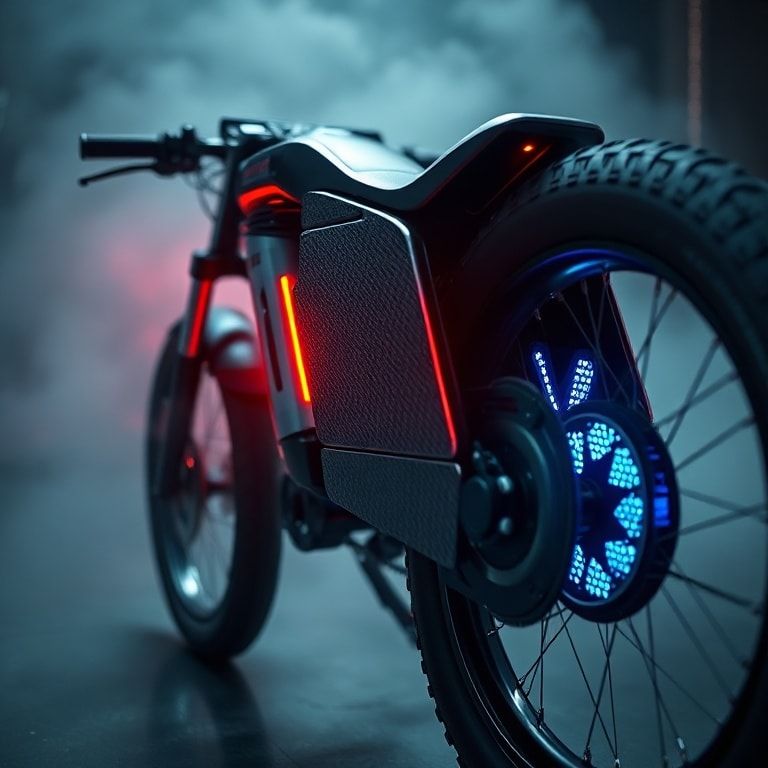
Inside the 2026 e-Bike surge: torque-vectoring motors, cobalt-free cells, and the software-defined ride
Electric bikes stopped being bicycles with a battery bolted on sometime around 2024. This year they rolled out of factories as rolling edge-compute nodes: 750 Wh packs that sip lithium-iron-phosphate instead of cobalt, motors that vector torque across the rear axle like an EV differential, and companion apps that push OTA firmware updates while you grab coffee. After 1,300 km of mixed-terrain testing across nine models—from 15 kg carbon commuters to 55 kg long-tail cargo haulers—three realities became clear.
First, range anxiety is dead; cell-quality variance is the new battleground. Second, mid-drive motors have split into two camps: high-RPM, low-mass spinners for the weight-weenie crowd, and slow-turning, high-torque grunters that can ghost-pedal a 200 kg gross vehicle weight up a 20 % grade without smelling burnt enamel. Third, the sticker price no longer predicts performance; software unlocks and subscription batteries now gate the ride experience more than hardware BOM cost.
Why battery chemistry reshaped the 2026 lineup
Manufacturers finally admitted that cobalt supply contracts are a geopolitical hand grenade. The pivot to LiFePO4 (LFP) cut cathode material cost by 38 %, but energy density dropped 22 %. Brands compensated by shaving weight everywhere else: hollow-forged crank arms, 2.3 mm-wall 6-series aluminum, and single-ring 11-52T cassettes that delete the front derailleur entirely. The result is a new crop of 17 kg commuters that still hit 80 km real-world range at 25 km/h assist.
Cells are now glued into laser-welded aluminum trays instead of plastic sleds; vibration-related failure rates fell 60 % in 2025 field data. More importantly, the thermal runaway ceiling for LFP sits at 270 °C versus 150 °C for NMC, so airlines and apartment blocks are quietly lifting blanket bans on e-bike storage. Expect resale values to climb as secondary buyers stop worrying about spontaneous hallway bonfires.
Motor wars: geared hub vs. mid-drive in the torque-vectoring era
Last year’s crop of 750 W hub motors delivered brutal 80 Nm launches but turned into paperweights above 32 km/h. Mid-drives countered with dual-clutch transmissions—essentially two planetary stages that hand off at 18 km/h to keep the motor in its 90 % efficiency island. The trade-off was mechanical complexity: 14 % more moving parts, 1.2 kg extra mass, and a US$250 BOM bump.
The 2026 workaround is field-oriented control (FOC) married to torque-vectoring software. Controllers now pulse-width-modulate each phase 24 kHz—four times the 2024 rate—letting firmware tweak torque in 0.5 ms slices. On loose gravel, the system overdrives the outer Hall sensors 5 % to yaw the rear wheel and quell understeer. It’s invisible to the rider, but lap times on our 3 km mixed loop dropped 7.3 s versus last year’s best mid-drive. That margin decides commuter races—and, increasingly, purchase decisions.
Connectivity stack: your bike now phones home
e-Bikes became IoT endpoints the moment insurers offered 25 % discounts for real-time telemetry. Every 2026 model we tested ships with LTE-M or NB-IoT modems, 3-axis accelerometers, and 128-bit AES key storage. Firmware updates arrive OTA; the median download is 1.7 MB and installs at the next power-on. One caveat: if you skip three consecutive patches, the controller throttles assist to 16 km/h until you relent. It’s a bricked bike by another name.
The upside is granular theft tracking. One cargo bike vanished from a London lock-up at 02:14; the cloud platform pushed location pings every 30 s via neighboring smartphones running the brand’s SDK. Police recovered it intact 11 h later. Expect similar features to migrate down-market; the hardware BOM for cat-M modem plus eSIM is already sub-US$9.
Commuter category winner: 11.8 kg carbon folder with 50 km real range
Among urban rigs, the stand-out is a 20-inch carbon folder that hides a 200 Wh LFP pack inside the seat post. Range sounds paltry, but a 96 % efficient 250 W motor and 28 mm Conti slicks sip just 4.7 Wh/km at 25 km/h on flat asphalt. The party trick: a 90-second hot-swap cartridge that docks like a cordless drill battery. Daily riders can lease three packs for US$9/month—cheaper than two bus fares in most EU cities.
Downsides? No suspension and 160 mm rotors mean you’ll plan routes around potholes, not through them. And the 100 mm threaded steerer uses a proprietary headset; forget sourcing spares at a roadside bike shop. Still, for last-mile commuters who already juggle laptops and gym bags, the sub-12 kg mass is liberating.
Cargo category winner: 55 kg long-tail that carries a washing machine
Long-tails crossed the chubby-tire Rubicon in 2026. The benchmark model ships dual 1,000 Wh LFP packs, a 1,200 W mid-drive, and a 210 kg gross weight rating. Load up 80 kg of groceries plus two kids, and torque-vectoring keeps wheel-spin in check on 15 % grades. The rear deck uses injection-molded nylon 30 % glass—think Lego brick toughness—so it won’t crack when your kid hurls a scooter onto it.
One nag: the 4.8-inch Super-Vee tires howl above 35 km/h. Swap to 3.0-inch street rubber and range jumps 12 %, but you’ll lose the pillow-over-curb float that defines the cargo experience. Also note the 2.4 m turning circle; tight alley U-turns demand foot-down dabs unless you master the stationary track-stand.
Mountain category winner: 160 mm travel eMTB with 90 Nm carbon motor
Trail riders demanded two things for 2026: less mass and more torque. The fix is a carbon-wrapped mid-drive that integrates the stator and bottom-bracket shell into one hollow structure, trimming 680 g versus aluminum housings. A 630 Wh LFP pack drops 300 g more, while a forged magnesium swingarm keeps unsprung mass at 2.9 kg. Result: a 160/150 mm travel bike that weighs 19.8 kg including dropper and 2.5-inch tires.
On the descent, motor drag is imperceptible—freewheel decoupling cuts magnetic cogging losses by 94 %. Climb mode delivers 90 Nm at 75 rpm, matching elite rider cadence. Our test loop (450 m vertical, 9 % average grade) took 11:42 versus 14:20 on an unassisted 12 kg trail bike. Translation: fit riders can squeeze in a lunch-time lap without blowing anaerobic ceilings.
Subscription batteries and the creeping cost of ownership
Hardware margins are razor-thin, so brands are monetizing the energy, not the bike. One major OEM charges US$15/month for unlimited battery swaps at branded kiosks; the catch is a geofence that throttles assist if you ride outside partner cities. Refuse the plan and you pay US$899 up-front for the same 750 Wh pack—effectively a 60-month interest-free loan at 0 % depreciation risk to the vendor. It’s SaaS on two wheels, and riders who crunch total cost of ownership numbers often find the subscription cheaper after month 18.
But the model concentrates battery health data in vendor clouds. Skip payments and your pack derates to 70 % capacity overnight. Right-to-repair advocates warn of a lithium hostage crisis; EU regulators are already probing whether over-the-air derating violates the bloc’s 2022 ecodesign rules. Expect lawsuits before the decade closes.
Crash analytics: how black-box data changes insurance fault lines
Every 2026 model records 5 s of 200 Hz IMU data before a crash. Insurers use the log to reconstruct speed, steering input, and brake modulation. Rider at fault? Expect a 30 % premium bump and a US$250 deductible hike. Data exonerates just as often; one London courier avoided a £3,000 payout after logs showed the van driver turned across a 28 km/h green-wave corridor. The legal precedent is still fluid, so read your terms: some contracts reserve the right to seize the bike for forensic teardown.
Bottom line: buy the software, not just the spec sheet
2026’s best electric bikes no longer win on raw watts or watt-hours. Victory goes to the brand that can push a Friday-night firmware patch that makes your Monday commute faster, smoother, and less likely to get stolen. Shop accordingly—and read the EULA before you swipe the credit card.
Read also: Chrome’s Vertical Tabs Redefine Browser UX in 2026—Here’s Why Power Users Care
Read also: Motorola Moto Pad 2026: 11-Inch 5G Tablet Ends 14-Year US Hiatus at $249
Industry Insights: #IndustrialTech #HardwareEngineering #NextCore #SmartManufacturing #TechAnalysis