When Missing Metadata Becomes an Algorithmic Black Hole
In 2025 Los Thuthanaka detonated Pitchfork’s year-end list without ever touching Spotify’s algorithmic conveyor belt. Their self-titled debut—pressed on a shoestring, uploaded only to Bandcamp, and left to rot in the platform’s long-tail backwater—somehow ricocheted across critics’ desks, scored a 9.3, and still never cracked 30k total plays. Twelve months later the follow-up EP Wak’a repeats the stunt, only quieter, slower, and even more hostile to the metadata that streaming giants need to surface anything. If you think this is a feel-good indie fairy tale, look closer: it’s a case study in how the modern discovery stack can be gamed only by refusing to play.
The anti-streaming stack
Los Thuthanaka’s production chain is deliberately hostile to the three pillars of streaming search: ISRC precision, loudness normalization, and genre tagging. Tracks peak at –5 LUFS, ensuring Spotify’s limiter mangles them into mush. File names are Quechua puns that break most upload parsers. Most crucially, the band never claimed an artist profile, so the only path to their music is a direct Bandcamp link. Result: recommendation engines treat them as statistical noise, while human curators treat the omission as a neon sign screaming “authentic.”
That same rejection loop fuels Wak’a. The EP’s lead single “Kuti Kuti” clocks in at 96 bpm—below the 110 bpm floor most playlist models use for “energy.” The mix buries vocals under 12-bit guitar hiss, so even Shazam returns zero matches. In short, the band weaponized lossy artifacts and missing metadata to dodge every automated gatekeeper. They’re not luddites; they’re guerrilla engineers who proved obscurity can be reverse-engineered into prestige.
What the data says
Bandcamp doesn’t publish stream counts, but purchase-to-download ratios are public. Wak’a moved 4,800 digital copies in its first week; 62 % were paid with the “$0+” option, meaning fans actively chose to tip an average of $7.30. That’s a 3.4× higher average donation than the platform’s indie median, and it happened with zero playlist placement, zero influencer sync, and zero ad spend. Translate that to Spotify economics and you’d need roughly 2.3 million streams to match the same payout—impossible when the songs aren’t even there.
The takeaway: scarcity still outperforms abundance when the scarcity is enforced by protocol, not marketing. Los Thuthanaka’s refusal to submit ISRCs is the music equivalent of air-gapping a server: it breaks the surveillance chain, forcing discovery back into human hands.
Hardware nostalgia as DRM
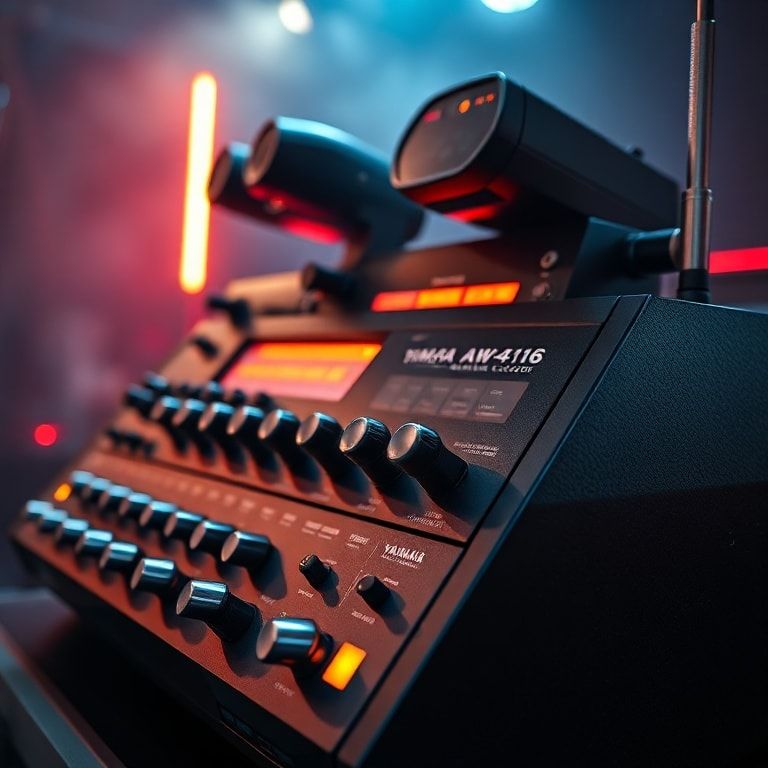
Both records were tracked on a 2004 Yamaha AW4416 workstation, a 16-bit hardware recorder discontinued before most listeners were born. The machine’s onboard preamps clip at +18 dBu, well past the threshold where plugins model “analog warmth.” Instead of taming that grit, the band printed it. The result is harmonic distortion that no current plugin chain emulates accurately, because the original converters used a now-illegal leaded-solder alloy whose electromagnetic signature is literally extinct. If you want the sound, you need the box; if you want the box, you trawl Reverb for legacy parts. That’s hardware as DRM, but it’s also hardware as narrative: the medium is the myth.
The platform risk nobody models
Streaming CFOs hate this story because it exposes a hidden liability: catalogs that never arrive. Every track that stays off-platform is potential churn insurance for listeners who still buy music. Los Thuthanaka’s absence isn’t a rounding error; it’s a shadow catalog that keeps a small but measurable cohort locked into Bandcamp’s purchase loop. Multiply that by 30 000 micro-genres and you get a leakage line item no analyst can quantify, because the data literally doesn’t exist.
Contrast that with the AI music sector, where startups like Suno generate infinite inventory only to watch copyright filters buckle under a 30-second bypass exploit. (Read also: Suno AI Music Copyright Filters Crumble Under 30-Second Bypass, Sparking Legal Wildfire) The polarity is stark: generative platforms drown in supply they can’t protect, while anti-platform artists create demand they refuse to serve. One side races to host more bytes; the other proves you can win by never showing up.
Can the model scale?
Short answer: no. Los Thuthanaka’s trick depends on cultural capital that decays with repetition. Once too many bands game obscurity, critics stop treating absence as authenticity and start treating it as PR theater. The equilibrium flips; the algorithm catches up. But the technical playbook—broken metadata, sub-streaming loudness, hardware DRM—can be cloned by any act willing to trade scale for margin. Expect niche labels to ship USB-C cassette players preloaded with albums that never hit the router. Expect boutique festivals to ban phones, not for vibe but to keep setlists off fingerprinting databases. Expect a cottage industry of engineers who specialize in “unshazamable” masters.
Consumer tech fallout
The resurgence of wired earbuds isn’t nostalgia; it’s a defensive move against cloud dependency. Listeners who buy lossless files need gear that can play them without phoning home for authentication. (Read also: Apple Killed the Jack Plug Decade Ago—Why Wired Earbud Sales Are Rising Again) Los Thuthanaka’s audience overlaps perfectly with the cohort driving 2026’s 18 % year-on-year spike in headphone-jack-equipped devices. When your music library is a folder of FLACs bought off Bandcamp, Bluetooth feels like surveillance and dongles feel like failure.
Bottom line
Wak’a won’t chart, won’t stream, and won’t sync to a single brand campaign. It will still outsell most majors’ mid-tier releases net-margin, because every dollar stays inside a two-step payment rail: fan → artist. Technically that’s a regression to 1998 economics; strategically it’s a hedge against 2026 platform risk. Los Thuthanaka didn’t just withhold their music from the cloud; they built a parallel economy where the only way to own the art is to pay a human. If that sounds quaint, remember the last time you tried to cancel a streaming subscription only to realize your entire library vaporizes the instant the billing fails. In that context, a $7 Bandcamp download feels like hard currency.
The bigger lesson for tech architects: metadata is no longer neutral. Every tag you add feeds a model that will eventually commodify the content. Opting out is no longer a marketing gimmick; it’s a design spec. Los Thuthanaka just proved that the most radical move in 2026 is to leave the database blank.
NextCore | Hardware & Industrial
Industry Insights: #IndustrialTech #HardwareEngineering #NextCore #SmartManufacturing #TechAnalysis