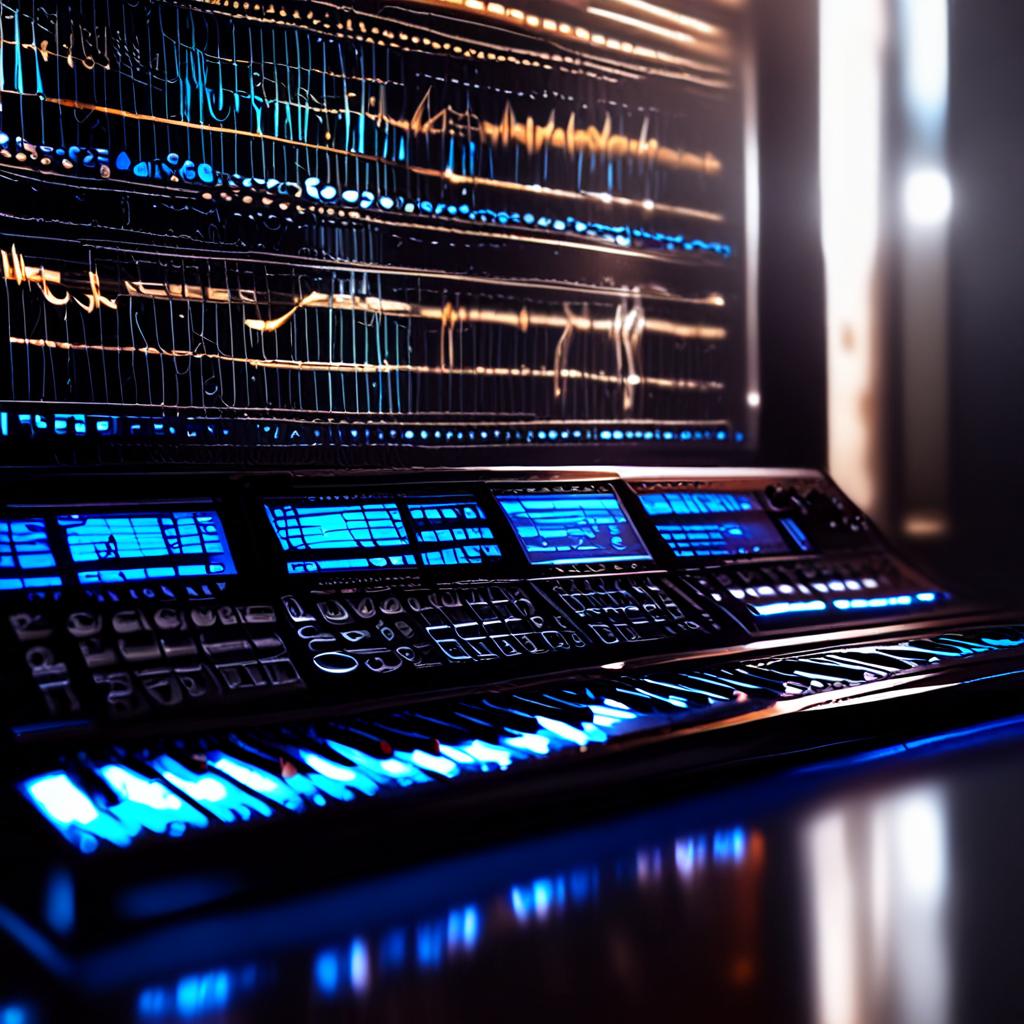
The music industry stands at a pivotal crossroads as artificial intelligence transforms every aspect of creation, distribution, and consumption. What began as experimental AI-generated tracks has evolved into a complex ecosystem where technology both empowers artists and challenges fundamental notions of creativity and ownership.
The Legal Battlefield: Copyright Wars and Fair Use Debates
The legal landscape surrounding AI music remains contentious. Major record labels have launched high-profile lawsuits against AI music generators like Suno and Udio, alleging systematic copyright infringement. These companies, valued at billions of dollars, face accusations of training their models on copyrighted material without permission. The lawsuits represent a broader industry struggle to reconcile traditional copyright frameworks with AI's data-hungry nature.
Meanwhile, companies like Universal Music Group have pursued a different strategy, signing licensing deals with AI firms to monetize their catalogs while maintaining control. This approach acknowledges that AI music is here to stay and seeks to establish frameworks for fair compensation. The contrast between litigation and licensing reflects the industry's uncertainty about how to navigate this technological disruption.
Technical Innovation: Beyond Simple Prompts
AI music generation has advanced far beyond basic text-to-music prompts. Modern systems can now analyze complex musical structures, generate multi-instrument arrangements, and even mimic specific artists' styles with remarkable accuracy. Tools like Google's Lyria and ElevenLabs' music generators demonstrate capabilities that blur the line between human and machine creativity.
The technical sophistication extends to specialized applications. AI systems now assist with sample sourcing, demo recording, and even playlist curation on platforms like Spotify. These tools don't replace human creativity but rather augment it, allowing musicians to explore ideas more quickly and efficiently. The debate over whether AI-generated music qualifies as "art" misses the point—these tools are becoming integral to modern music production workflows.
Market Disruption: The Economics of AI Music
The economic implications are profound. AI-generated music threatens to flood streaming platforms with content, potentially overwhelming human-created works. A North Carolina man recently pleaded guilty to AI music streaming fraud, highlighting how the technology can be exploited for financial gain through manipulation of streaming algorithms.
Conversely, AI music tools are democratizing music creation. Independent artists can now produce professional-quality tracks without expensive studio time or session musicians. This accessibility could lead to an explosion of musical diversity, though critics worry about the homogenization of sound when AI models are trained on existing catalogs.
Detection and Transparency: The Fight for Authenticity
As AI-generated music proliferates, platforms are racing to implement detection and labeling systems. Apple Music now offers optional labels for AI songs and visuals, while Qobuz automatically detects and tags AI content. Deezer has opened its AI music detection tool to other platforms, creating industry-wide standards for transparency.
These efforts address consumer demand for authenticity. A survey revealed that 97 percent of people struggle to identify AI music, yet many listeners express concern about the authenticity of what they're hearing. The tension between technological capability and human desire for genuine artistic expression defines the current moment in music's AI evolution.
Creative Resistance and Cultural Impact
Not all responses to AI music have been passive acceptance. Bandcamp became the first major platform to ban AI-generated content entirely, taking a firm stance on artistic authenticity. Musicians report frustration with AI clones of their work, describing the phenomenon as "bullshit" that undermines their creative identity.
Yet some artists embrace AI as a collaborative tool. The Chainsmokers-approved AI music producer joining Google represents a new model where human artists partner with AI systems to create novel sounds. This hybrid approach suggests that the future of music may lie not in human versus machine, but in human-machine collaboration.
The Road Ahead: Regulation and Innovation
The music industry's "don't ask, don't tell" policy about AI usage reflects broader uncertainty about how to regulate this technology. As AI systems become more sophisticated, distinguishing between inspiration and infringement grows increasingly difficult. The industry needs clearer frameworks for attribution, compensation, and creative rights in the AI era.
Looking forward, several trends are likely to shape AI music's trajectory. First, improved transparency through better labeling and detection tools will help consumers make informed choices. Second, licensing frameworks will evolve to create sustainable models for AI music generation. Third, creative tools will become more specialized, moving beyond general-purpose generators to domain-specific applications.
The fundamental question isn't whether AI will transform music—that transformation is already underway. Instead, the industry must grapple with how to preserve artistic integrity while embracing technological innovation. As one industry observer noted, the challenge isn't just technical but philosophical: what constitutes creativity in an age where machines can compose symphonies?
For those interested in how AI is transforming other creative industries, Read also: Game Boy Cartridges: Can AI Authentication Tools Replace Collector Instinct? explores similar authentication challenges in the gaming world. The parallels between AI music detection and collectible verification highlight how technology is reshaping our understanding of authenticity across creative domains.
Conclusion: A New Musical Renaissance?
AI music represents neither utopia nor dystopia but rather a complex evolution of creative tools. Like previous technological revolutions—from electric instruments to digital recording—AI is fundamentally changing how music is made and consumed. The artists, platforms, and listeners who adapt to this new reality will shape the next chapter of musical history.
The current moment feels chaotic because we're witnessing the birth of a new creative paradigm. Just as photography didn't kill painting but expanded artistic possibilities, AI music won't eliminate human creativity but will likely spawn entirely new forms of musical expression. The challenge lies in navigating this transition thoughtfully, ensuring that technological progress enhances rather than diminishes the human elements that make music meaningful.
As AI music continues to evolve, one thing is certain: the industry will never be the same. Whether this represents a crisis or an opportunity depends largely on how stakeholders—from individual artists to major labels—choose to engage with these powerful new tools. The music of tomorrow is being composed today, and AI is writing some of the most intriguing notes.
Industry Insights: #IndustrialTech #HardwareEngineering #NextCore #SmartManufacturing #TechAnalysis