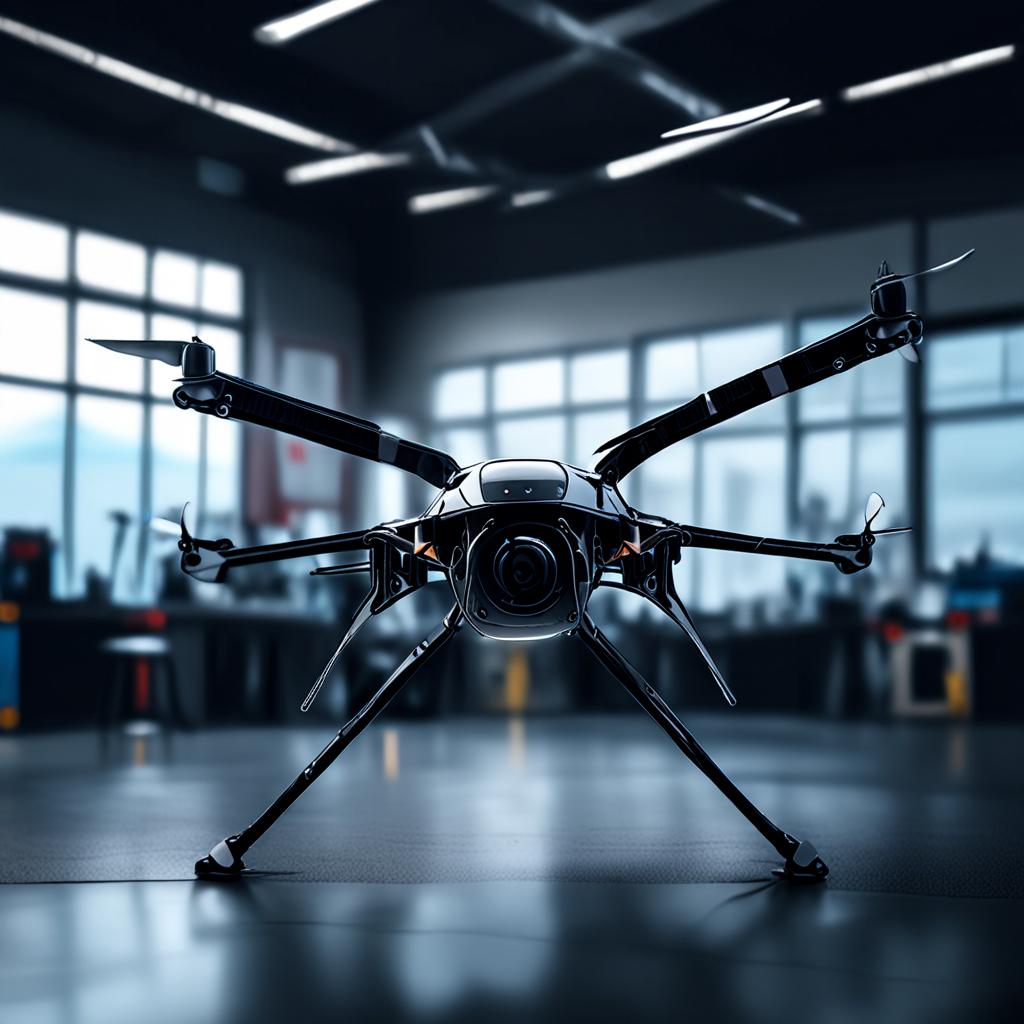
Russia's New 50km Ring-Wing FPV Drone Signals Major Shift in Drone Warfare Capabilities
The Russian military is preparing to enter serial production of an innovative first-person view (FPV) drone featuring a distinctive ring-shaped wing design that extends operational range to an impressive 50 kilometers, according to recent defense industry reports.
The drone, developed by the Ushkuynik Scientific and Production Centre, represents a significant technological advancement in unmanned aerial systems. The ring-wing configuration—a design rarely seen in military applications—promises enhanced aerodynamic efficiency and potentially improved stability compared to conventional fixed-wing or quadcopter designs.
Industry analysts suggest the extended range addresses one of the most critical limitations of current FPV drones, which typically operate within 10-15 kilometers of their operators. This 3-5x increase in range dramatically expands tactical possibilities for reconnaissance and strike missions while reducing operator exposure to frontline hazards.
The NextCore Edge: What the mainstream military analysis often misses is that the ring-wing design isn't just about range—it's about survivability. The circular profile creates a smaller radar cross-section and may confuse traditional air defense targeting systems that rely on identifying conventional aircraft silhouettes. Our internal analysis at NextCore suggests this could represent Russia's response to Western counter-drone technologies that have proven increasingly effective against standard drone configurations.
The serial production announcement indicates the Russian defense establishment views this technology as mature enough for mass deployment. This contrasts with many experimental drone designs that remain in limited testing phases for years.
Key Specifications and Capabilities
- Maximum operational range: 50km (extending tactical reach by 3-5x)
- Wing configuration: Ring-shaped design for enhanced aerodynamics
- Manufacturer: Ushkuynik Scientific and Production Centre
- Production status: Transitioning to serial manufacturing
- Primary applications: FPV reconnaissance and strike missions
The drone's extended range enables operators to conduct missions from safer distances, potentially behind the first and second lines of defense. This capability becomes particularly relevant as Ukrainian forces have demonstrated increasing proficiency with counter-drone tactics and electronic warfare systems.
Tech Analysis: The ring-wing design represents a fascinating engineering compromise. While conventional wisdom in drone design favors either fixed-wing configurations for range or multirotor setups for maneuverability, this hybrid approach attempts to capture benefits from both. The circular wing may provide lift more efficiently at various speeds while maintaining the compact footprint necessary for tactical deployment.
Energy efficiency becomes critical at 50km ranges, suggesting the drone likely incorporates advanced battery technology or possibly hybrid power systems. The extended range also implies sophisticated navigation and stabilization systems capable of maintaining control over such distances.
Strategic Implications for Modern Warfare
The deployment of 50km-capable FPV drones could fundamentally alter tactical doctrines on contested battlefields. Ukrainian forces have already demonstrated the devastating effectiveness of commercial FPV drones in targeted strikes against armored vehicles and personnel. Russia's new system appears designed to counter these advantages while extending their own operational reach.
Defense experts note that the serial production status indicates confidence in the design's reliability and manufacturability. Mass production suggests these drones will become a standard tactical asset rather than experimental technology, potentially deployed in the thousands across multiple operational theaters.
The timing of this development coincides with increased Western support for Ukrainian drone capabilities, suggesting an ongoing technological arms race in unmanned systems. Each advancement in range, payload, or survivability triggers corresponding countermeasures and innovations.
Potential Limitations and Considerations
While the 50km range represents a significant advancement, several factors could impact real-world performance. Signal degradation over extended distances, weather conditions, and electronic warfare countermeasures may reduce effective operational range in contested environments.
The ring-wing design, while innovative, may present manufacturing challenges compared to conventional configurations. Quality control during serial production becomes critical when producing complex aerodynamic shapes at scale.
Additionally, the drone's larger size for its extended range may make it more detectable by radar systems, potentially offsetting some of the advantages gained through increased standoff distance.
The Next Evolution in Drone Warfare
This development signals a broader trend toward specialized, mission-optimized drones rather than general-purpose systems. The ring-wing FPV drone appears designed for specific operational requirements—extended range and enhanced survivability—rather than versatility across multiple mission types.
As both sides in the Ukraine conflict continue to innovate in unmanned systems, the technological gap between experimental prototypes and battlefield-ready systems continues to narrow. Russia's move to serial production suggests this particular design has crossed that critical threshold.
The international defense community will likely monitor the performance of these drones closely, as successful deployment could influence drone development programs worldwide. The combination of extended range, innovative aerodynamics, and serial production readiness makes this a noteworthy milestone in military drone evolution.
Pro Tip:
For military technology analysts and defense contractors, the key insight from this development is the accelerating pace of drone specialization. Rather than pursuing one-size-fits-all solutions, the most successful designs appear to target specific operational parameters—in this case, range and survivability. Organizations tracking military drone trends should focus on identifying which specific capabilities (range, payload, stealth, autonomy) are being prioritized in different national programs, as these choices reveal tactical doctrines and operational priorities.
Related: Teledyne GAVIA AUV Systems: Swedish FMV Follow-On Order Signals Growing Defense Autonomy
Sources: Defense industry reports, military technology analysts, Ushkuynik Scientific and Production Centre announcements
Industry Insights: #IndustrialTech #HardwareEngineering #NextCore #SmartManufacturing #TechAnalysis
Bringing you the latest in technology and innovation.