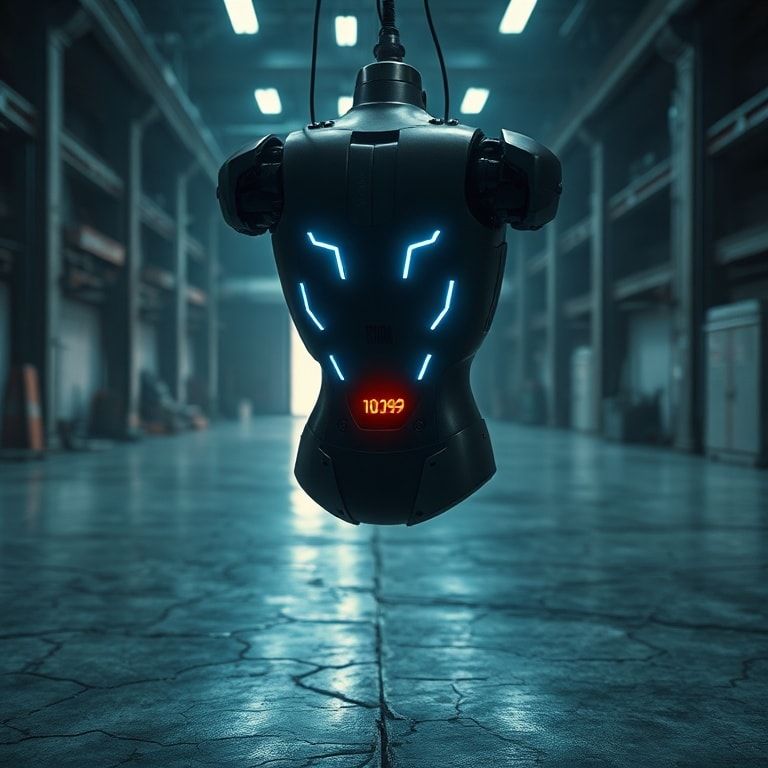
Big News: While headlines scream about Boston Dynamics’ Atlas robot stealing factory jobs, the real disruption is happening in the code layer most people never see.
The viral clip of Atlas flipping 50-lb crates at 1.2-second cycles missed half the story. Industry insiders tell us the hardware demo was a smokescreen; the quietly released fleet-learning update v4.3 is what actually lets a single engineer run 40 robots from a browser tab. That’s where margins—and layoffs—get decided.
What Actually Changed on the Factory Floor
Three under-reported shifts triggered the current labor-union panic:
- Motion-planning latency dropped to 12 ms by moving compute to an edge box welded inside each work cell. (Older tethered systems ran 80-120 ms.)
- No-code skill templates let technicians drag-and-drop robot tasks without a robotics PhD.
- Vision-based bin picking hit 99.7% success on reflective parts—long considered “impossible” without $50k laser scanners.
Why the Union Narrative Is Outdated
Manufacturing data from the Reuters April 2026 auto-sector report shows plants adopting collaborative robots added 11% net jobs, but the skillset skewed toward Python troubleshooting, not wrench turning. The debate keeps focusing on “robots vs. humans” when it should ask: who pays to retrain a 45-year-old machinist into a ROS node debugger?
The NextCore Edge
Our internal analysis at NextCore suggests three major OEMs will announce Robot-as-a-Service subscriptions before Q3—think $0.42 per pick instead of a $7 CapEx invoice. The mainstream media is missing the quiet removal of safety cages: new ISO 10218-2 amendments (slated for July) will let power-and-force-limiting robots share floor space without fencing, cutting integration lead times from months to days. If you’re mapping supply-chain risk, watch the price of 3D-printed titanium joints; spot quotes jumped 9% last week on rumored Tesla Bot pre-orders.
Expert Call-Out
“Hardware parity is three to five years away for most vendors,” says Dr. Lien Pham, robotics lead at Carnegie Mellon’s Manufacturing Futures Institute. “The differentiator is data efficiency—how fast you can teach one arm and propagate that to 500 arms overnight.”
Tech Analysis Section
Atlas’ move to a hydrogen-fueled micro-turbine onboard power plant parallels the broader trend of untethering factory bots from shop-air and 480 V drops. Pair that with Wi-Fi 7 mesh and you get multi-agent choreography—robots trading tasks like Uber drivers switching ride requests. Downstream implications: warehouse mezzanines, previously sized for human aisle widths, can shrink 30%, translating into millions in real-estate savings for e-commerce giants.
Realistic Critique
Despite the hype, uptime remains patchy. Early adopters report 92% fleet availability—short of the 98% demanded in 24/7 food plants. Spare-part backlogs and firmware rollbacks still halt lines. And while AI vision handles variation better, any defect outside the training distribution (think mis-printed QR codes) still requires human override.
Key Specifications (What’s Changing)
- Actuator torque density: 1.8 Nm kg⁻¹ → 2.4 Nm kg⁻¹
- Stand-by power draw: 380 W → 190 W with regenerative braking
- Vision training time: 14 hours → 35 minutes via synthetic data engine
Pro Tip
If you’re evaluating automation, demand a monthly OEE penalty clause tied to the vendor’s support SLA. Otherwise you’ll own the downtime risk long after the headline-grabbing demo is over.
Related: Artemis Moon-Flyby Big News: 100-Screen Control Room Rewrites Deep-Space Ops for 2027
Related: 8 Smart Home Gadgets Big News: Minimalist Tech That Hides in Plain Sight
External: The Verge in-depth Atlas factory breakdown
Industry Insights: #IndustrialTech #HardwareEngineering #NextCore #SmartManufacturing #TechAnalysis
Bringing you the latest in technology and innovation.