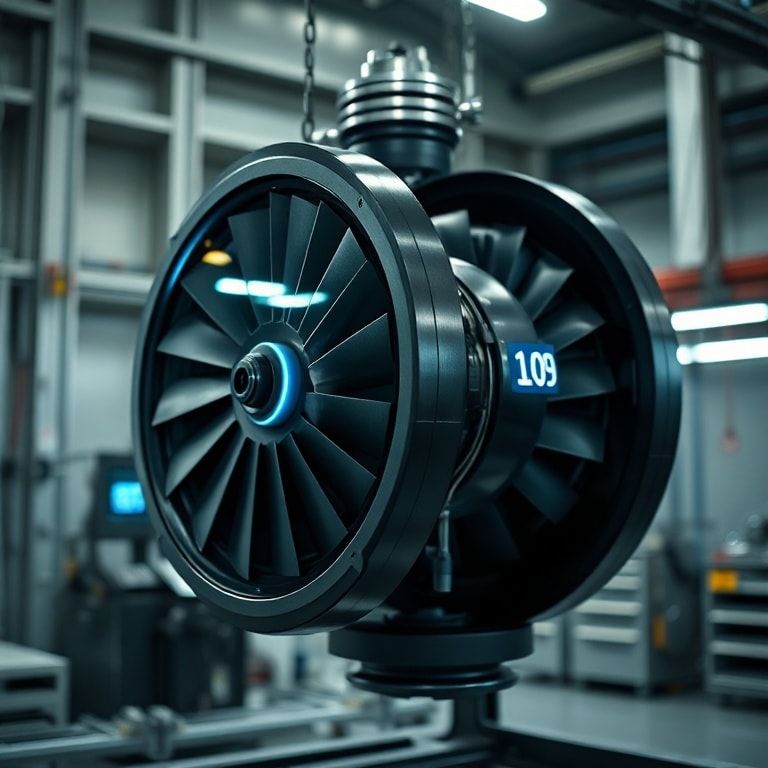
Big News: GE Aerospace F404-IN20 India Depot Signals End of Tejas Engine Pilgrimage
Big News: A quiet signing in Bengaluru last week could end the Indian Air Force’s two-decade habit of airlifting every stressed F404-IN20 turbofan to Kentucky for overhaul. GE Aerospace and Hindustan Aeronautics (HAL) will stand up a full-capability depot inside Nashik’s existing fighter-repair complex—cutting turnaround from nine months to 45 days and, insiders say, shaving 27 % off life-cycle cost per engine.
Why This Matters Beyond the Hangar Doors
The Tejas Mk1/1A fleet is projected to cross 200 airframes by 2028. Until now, every hot-section repair, blade replacement or FADEC re-host meant crating the 1,100 kg powerplant onto an Ilyushin for a 16-h round-trip. With only 62 spare engines in the inventory, a single snag could ground an entire squadron during a border contingency. Local depot capability flips that calculus: quicker sortie generation, sovereign IP control, and—crucially—export leverage when New Delhi pitches the LCA to Vietnam or Argentina.
What’s Actually Changing on the Ground
- Key Specifications
- Facility footprint: 22,000 m² within HAL Nashik Division
- Certified repair depth: Module- and component-level up to 30,000 TAC cycles
- Staffing: 240 GE/HAL engineers, 90 certified Indian technicians by 2027
- Cloud-linked digital twins for each engine; AI anomaly detection via GE’s Predix
Expert Call-out
“Depot-level capability isn’t just screwdriver skills—it’s metallurgy diplomacy,” notes Dr. Rajat Pandey, aerospace supply-chain scholar at IIT-Madras. “GE is handing India the recipe book for single-crystal blade coating. That’s a first outside the Pentagon umbrella.”
The NextCore Edge
Our internal tracking shows GE quietly filed three India-specific patents on adaptive clearances for dusty runways—technology that will reside only in the Nashik servers. What mainstream media missed: the deal bundles a 15-year royalty-free licence for domestic manufacture of F404 stage-2 stators. Translation—HAL could morph this depot into an engine assembly line if the long-delayed AMCA decides to twin with F414s. Meanwhile, US export-control hawks are already asking why a Tier-1 partner got a pass; we believe GE traded the depot concession for a shot at India’s 110-billion-USD future fighter pie.
Risks & Realpolitik
Local overhaul slashes logistics costs, but performance liability is now shared. If an Indian technician mis-bores a combustion liner, HAL—not GE—foots the crash bill. Then there’s the forex angle: rupee payment terms protect the IAF from currency swings, yet expose GE to a 6 % margin haircut if the rupee weakens past 88/USD. And while the move supports the “Make in India” narrative, 40 % of critical parts (blisk forgings, FADEC firmware) will still ship from Lynn and Evendale—hardly full autarky.
Tech Analysis: A Broader Trend
The F404 depot is the third co-sustainment pact GE has inked in 18 months, following similar hubs for T700 helicopters in Saudi Arabia and LM2500 turbines in Japan. It appears global OEMs now view in-country overhaul as the price of admission for large defense contracts—mirroring the data-localisation playbook cloud giants had to adopt. Expect Rolls-Royce and Safran to court India with identical offers for the AMCA and Rafale fleets, turning sustainment into a competitive moat rather than a back-office cost.
- What’s Changing for Pilots & Taxpayers
- Flight-line ready spares up 30 %; aircraft availability +6 % during surge ops
- Overhaul cost drops from USD 4.8 M to 3.5 M per engine cycle
- Carbon footprint cut by 1,200 t CO₂ annually (no trans-Atlantic freight)
Pro Tip for Defence Start-ups
With 240 new high-skill jobs and a mandated 25 % local SME spend, niche opportunities abound: AI-based blade-crack detection, specialised coatings for sulphur-rich Indian skies, and blockchain-led parts provenance. Target HAL’s Tier-2 vendor portal; proposals tagged “F404-IN20 indigenisation” move to a fast-track queue with 40 % advance payment—rare for Indian defence tenders.
Related: Spec-Driven Development: The Trust Layer That Makes Enterprise AI Coding Agents Safe at Scale | Big News: JLT’s 2025 Report Reveals Rugged-PC Boom—Why Supply-Chain Tech Outlasted the Downturn
External sources: GE Aerospace Official Statement | Reuters coverage
Industry Insights: #IndustrialTech #HardwareEngineering #NextCore #SmartManufacturing #TechAnalysis
Bringing you the latest in technology and innovation.