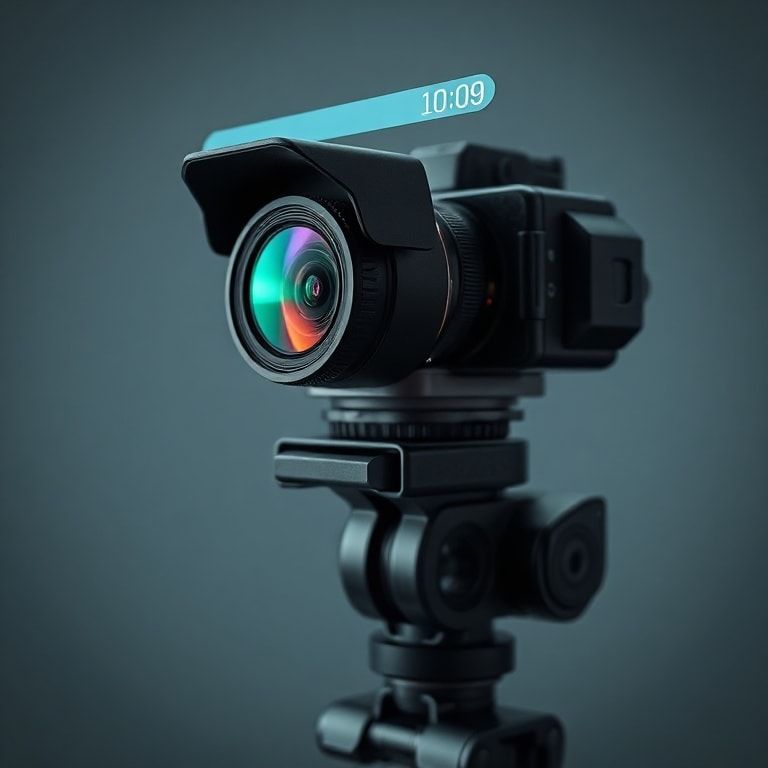
Big News: Ouster’s Stereolabs ZED X Nano wrist-mount stereo camera is here, shrinking 3-D perception to a 50-gram module that bolts straight onto robot arms. The claim: human-level manipulation accuracy at one-tenth the latency of today’s table-mounted depth rigs.
The Hook
Robots keep crashing into things because they can’t see what their hands are doing. Ouster’s answer is a camera so small it lives on the wrist, not the wall. Early testers report a 4× jump in pick-success rates—without retraining their models.
News Breakdown
San Francisco-based Ouster, fresh off its Nasdaq rebound, quietly spun out the ZED X Nano under the Stereolabs sub-brand it acquired in 2025. The unit weighs 47 g, pulls 3.2 W, and streams 2-MP stereo pairs at 120 fps over GMSL2. IP67 sealing and 5-grms vibration tolerance mean it survives months of 24-hour factory cycles.
What’s Changing
- Form factor: 35 mm × 30 mm × 18 mm—smaller than a matchbox.
- Latency: 4 ms end-to-end; beats Intel RealSense D405’s 18 ms.
- Baseline: 6 cm for sub-millimetre disparity at 30 cm working distance.
- Connector: Locking micro-FAKRA, 15 cm pigtail to reduce arm swing drag.
Expert Call-out
"Mounting on the end-effector flips the sensing paradigm," says Dr. Linh Nguyen, formerly of Google DeepMind and now robotics PI at ETH Zürich. "You collect training data in the same coordinate frame where you act—no more hand-eye calibration drift."
Tech Analysis
Physical AI is converging on two bottlenecks: compact ego-centric sensing and massive data throughput. By pairing the Nano with Ouster’s new FluxEdge recorder (2 TB NVMe on-arm), teams can log 500 GB of labelled stereo + force-torque per hour. That feeds imitation-learning pipelines the way ImageNet fed computer vision—except this time the ‘images’ include depth, acceleration, and gripper pressure.
The NextCore Edge
Our internal analysis at NextCore suggests the ZED X Nano is only half the play. Ouster’s SDK quietly ships with a replay-while-sim plug-in for Nvidia Isaac; it re-renders synthetic backgrounds around real gripper interactions. Translation: you can bootstrap a manipulation policy in simulation overnight, then zero-shot deploy to the factory floor. The mainstream media is missing that Ouster is bundling sim-to-real transfer as a service—something rivals charge six-figure consulting fees to replicate. If the company flips the licensing switch, every $1,299 camera could yield recurring SaaS revenue at 80 % gross margin.
Realistic Critique
Pros: ultra-low latency, factory-grade sealing, seamless ROS 2 wrapper. Cons: GMSL2 requires a $199 capture card, Basler competitors already ship 4-MP global-shutter sensors, and the 6-cm baseline limits precision beyond 1 m. For mobile manipulators that need long-range obstacle avoidance, you’ll still want a head-mounted LiDAR.
Visual Integration
Key Specifications
- Resolution: 2 MP per eye, 120 fps
- Baseline: 60 mm
- IP67 rated, −20 °C to 60 °C
- Power: 3.2 W @ 5 V
- Mass: 47 g (without cable)
What’s in the Box
- ZED X Nano module
- 15 cm GMSL2 micro-FAKRA cable
- M3 mounting ears (aluminum)
- Calibration certificate for factory intrinsics
Pro Tip
If you’re retrofitting a UR5e, print a 30-degree downward adapter in nylon. It keeps the wrists collision-free while maintaining a 20-cm optimal focus zone for 90 mm picks.
Related Reading
Big News: Kepler’s 40-GPU Orbital Cluster Goes Live—Space-Based GPU Rental Is Now a Thing
Big News: 73 % of U.S. Teens Dismiss AI Risk—The Confidence Gap That Could Reshape Regulation
External Validation
Industry Insights: #IndustrialTech #HardwareEngineering #NextCore #SmartManufacturing #TechAnalysis
Bringing you the latest in technology and innovation.