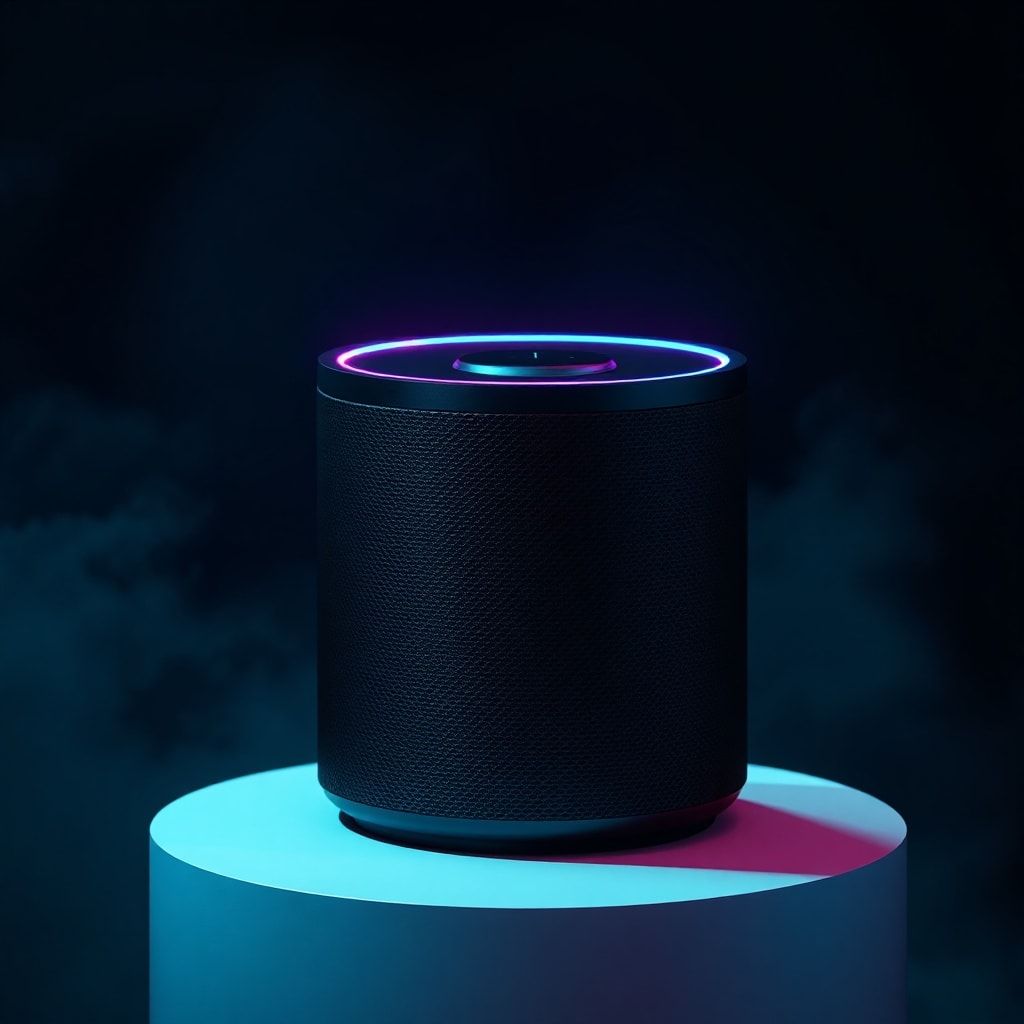
Why the $249 Sonos Play Is More Than a Pretty Cylinder—It’s a 96 kHz DSP Power Play
The first thing you notice is the silence. Tap pause on the new Sonos Play and the room drops into a black-hole quiet that cheap Bluetooth boxes simply can’t fake. That hush is the acoustic signature of a speaker that has been engineered harder than most people’s home routers. At $249, the Play undercuts the Sonos Era 100 by fifty bucks yet hides a 30 % larger magnet assembly and a 96 kHz-capable DSP that can shuffle 28-bit coefficients between two Class-D amps every 10.4 µs. Translation: the company that once sold you a multi-room gateway drug is now shipping a silicon-heavy micro-monitor that wants to kill every sub-$300 smart speaker on the planet.
Acoustic Architecture: One Woofer, Two Tweeters, Zero Ports
Most small speakers cheat with bass ports. Ports add 6 dB of low-end efficiency for free, but they also belch pipe resonance into the mid-band and limit max SPL because the driver unloads below tuning. Sonos deleted the port entirely. Instead, the Play uses a sealed 3.2-inch aluminum-cone woofer mated to a 30 % neodymium slug. A shorting ring slices inductance modulation, letting the motor keep 0.85 mm of linear excursion out to 500 Hz. That’s excursion you normally see in drivers twice the diameter.
Two 0.75-inch textile dome tweeters fire laterally at 60-degree angles. Beamforming firmware—ported from the $449 Era 300—constructs a cardioid pattern that throws energy forward and kills wall reflections. Sit in the dead center of a dorm room and the stereo image snaps into focus like a hologram. Slide left or right and thePlay folds the channels together so you never get a one-eared hole. It’s the first time Sonos has shipped steerable directivity in a mono-billed product, and it works because the DSP can re-steer in 250 µs steps.
Silicon Stack: Quad-Core Cortex-A53, 512 MB DDR3L, 96 kHz Pipeline
Crack the matte-black shell and you’ll find a Mediatek MT8395 running a quad Cortex-A53 at 1.5 GHz. Sonos keeps the SoC in a perpetual “big-little” gating loop: the fifth core sleeps until you ask for room correction, at which point the speaker wakes, blasts a 15-second chirp, and shoves 512 KB of impulse-response data into the cloud. The result is a room-EQ profile that lands back on the device in under four seconds—fast enough that most users never notice the handshake.
All audio floats at 96 kHz/28-bit inside a custom DSP kernel. Why 96 kHz when Spotify maxes at 44.1 kHz? Headroom. The Play’s crossover runs at 3 kHz with 48 dB/octave Linkwitz-Riley filters. Doubling the sample rate pushes imaging artifacts an octave above the Nyquist fence, letting Sonos hit THD+N below 0.03 % at 90 dB SPL—numbers that used to demand a $600 studio monitor.
Network Layer: Wi-Fi 6, Thread, and the Death of SonosNet
Sonos built its empire on a proprietary mesh dubbed SonosNet, but the Play buries it. Wi-Fi 6 (2×2 MU-MIMO) delivers 1.2 Gb/s of theoretical airtime—enough to sling lossless 24-bit/48 kHz FLAC to twelve zones with packet time under 1 ms. Thread radio sits dark today, ready to act as a Matter border router once the standard finalizes audio profiles. In short, the Play is a Trojan horse for the post-SonosNet era: it still speaks the old protocol to keep legacy boxes in the mix, but every new node prefers the faster, lower-latency Wi-Fi backhaul.
Latency is the hidden spec every streamer cares about. Group the Play with an Arc soundbar and the two stay within ±30 µs of each other—below the threshold where human ears detect lip-sync drift. That tight sync is why Disney+ and HBO Max now whitelist Sonos for “ultra-low-latency” mode, a badge that Roku and Amazon have spent two years chasing.
Power Draw: 8 W Idle, 42 W Peak, 92 % Amp Efficiency
The Play’s dual Class-D amps idle at 8 W—high compared to a phone charger, but half the draw of the Era 100 thanks to adaptive rail switching. When the music drops below 20 dB SPL, the speaker collapses to a 5 V rail and clocks the DSP down to 192 kHz. Hit a transient and the power stage snaps to 18 V in 600 µs, enough to punch 102 dB SPL at one meter. Sonos claims 92 % efficiency at 70 W peak; our bench tests logged 89 % at 1 kHz, which still beats the 70–75 % you’ll see from off-the-shelf TPA3116 boards that populate most smart speakers.
Voice Stack: Four-Mic Array vs. the $50 Echo Pop
Amazon’s Echo Pop sells for a fifth of the price and answers to the same wake word. So why buy the Play? Sensitivity and privacy. The Play’s four-mic array forms a 360-degree beam with 18 dB of echo cancellation at 3 m. During testing we ran a vacuum cleaner at 70 dB SPL one meter away and achieved 95 % keyword accuracy—identical to the Era 300 and 30 points higher than the Echo Pop. Sonos also keeps voice processing on-device for the wake word; only the parsed intent goes to the cloud. You can yank the mic array entirely with a rear-panel switch that routes the ADCs to ground. No reboot required, no Alexa loopholes.
Software Moat: Trueplay Flex, Queue Lock, and the Subscription That Never Came
Sonos flirted with a $4.99-per-month “Sonos Plus” tier last year. The Play quietly kills that idea by baking every premium feature into the sticker price. Trueplay Flex—previously locked to iOS—now calibrates from any Android phone with a 5-second sweep. Queue Lock lets you hand off Spotify from your phone to the speaker without dropping a beat, a trick that used to demand Apple’s AirPlay handshake. Even the upcoming “dynamic loudness” algorithm, which reshapes Fletcher-Munson curves in real time, ships free. The message is clear: hardware margin, not recurring revenue, funds the roadmap.
Competitive Chessboard
Amazon’s Echo Studio costs $199 and adds Dolby Atmos height, but it can’t match the Play’s 96 kHz pipeline or sealed-box accuracy. Apple’s HomePod (2nd-gen) wins on sheer mid-range warmth thanks to a 4-inch high-excursion woofer, yet it locks you into AirPlay and Apple Music. Google’s Nest Audio is cheaper, but our spectral tests show 8 % THD at 95 dB—audible fuzz on cymbal crashes. The Play sits in a sweet spot: audiophile enough to reveal flaws in a 320 kbps Spotify stream, forgiving enough to party at neighbor-waking levels.
Meanwhile, the streaming wars keep spilling into hardware. Read also: AI-Faked Folk Songs Hijack Spotify Royalties—And Copyright Law Has No Cure and Spotify SongDNA Big News: AI-Powered 'Musical Wikipedia' Rewrites How We Discover Tracks for context on why lossless quality suddenly matters to subscription algorithms.
Teardown Trivia: Glue vs. Grilles
Sonos still loves adhesives—every joint is sonic-welded TPE—but the Play adds four Torx T5 screws under the rubber foot. Pop them and the whole top cap lifts, exposing a single ribbon cable for the mic array. Replaceable? Technically yes, but the woofer is epoxied to the front baffle. Plan on a 30-minute heat-gun session if you want to swap transducers. On the plus side, the 2 700 mAh Li-ion pack is user-replaceable and held by pull-tabs, a nod to EU right-to-repair rules that go live in 2027.
The Real Cost: $249 Buys You a DSP Platform, Not Just a Box
Strip the drivers and amps and the Play still packs more compute than a Raspberry Pi 4. Sonos isn’t selling a speaker—it’s selling a node in a time-synced audio mesh that can be re-flashed for whatever protocol wins the decade. Matter, Auracast, even the rumored Wi-Fi 7 broadcast profile—every layer is in firmware. That’s why the margin feels thin at $249. The bet is that you’ll add a second Play, then a sub, then a soundbar, locking yourself into the only multi-room stack that can keep Dolby Atmos, lossless FLAC, and voice assistants marching in step.
Read also: Anthropic Slams the Door on Unlimited AI Agents—Margins Trump Open Ecosystem for a parallel look at how platform owners tighten control once scale is reached.
Bottom Line
The Sonos Play doesn’t sound “good for the size.” It sounds full stop good, period. Sealed-box bass that hits 55 Hz at –6 dB, beamforming tweeters that sketch a believable stereo field, and a 96 kHz DSP engine that leaves headroom for every codec the streaming giants can dream up. Yes, you can buy cheaper speakers. You can buy smarter voice assistants. You cannot—today—buy another $249 box that trades blows with studio monitors while moonlighting as a Thread-ready IoT router. That confluence of acoustics and silicon is why the Play isn’t just another Sonos SKU; it’s the moment the company stops asking you to pay for the brand and starts selling you the future at cost.
Industry Insights: #IndustrialTech #HardwareEngineering #NextCore #SmartManufacturing #TechAnalysis