Why Peter Thiel Just Dropped $220 Million on Cattle Hardware That Runs on Sunshine
Peter Thiel doesn’t do “nice to have.” When Founders Fund wired $220 million to New Zealand startup Halter earlier this month, the largest single check the firm has ever written for an ag-tech company, the message was blunt: industrial livestock is the next compute substrate. The pitch deck wasn’t about animal welfare optics; it was about turning 1.5-billion grazing acres into a deterministic, API-driven mesh network where every cow is a solar-powered actuator.
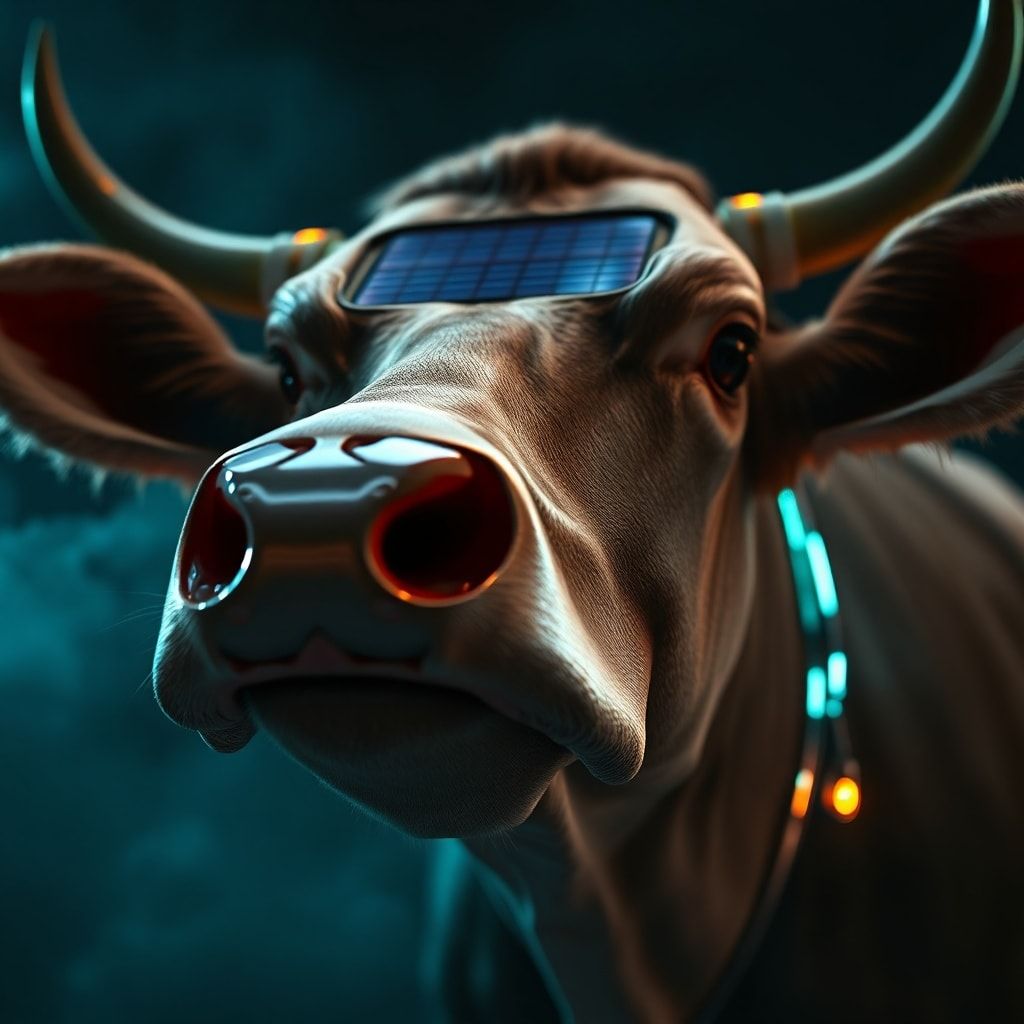
Halter’s trick is a 1.1-kg collar that straps on like a yoke, fires out ultrasonic pulses, and steers cattle with micro-vibrations—no fences, no dogs, no diesel-fuelled four-wheelers. Farmers draw virtual boundaries on an iPad; the collar nudges the animal back inside. Meanwhile, a LoRa radio streams accelerometer data that predicts estrus, lameness, and pasture intake within 3 % of lab-analyzed forage samples. The solar strip on top trickle-charges a 1200-mAh LiFePO₄ pack that survives 60 hours in December drizzle. In short, Thiel paid for the Android moment for ruminants.
The Margins That Justify a Quarter-Billion
New Zealand’s 10-million-strong dairy herd costs farmers roughly NZ$1.2 billion a year in labor, feed and fencing. Halter’s internal pilot on 25,000 cows claims a 40 % drop in animal-hours spent on “non-productive” tasks—walking to the milking shed, crossing roads, hunting stray stock. At NZ$6 per collar per month that pencils out to NZ$180 per cow annually; break-even arrives in 7.5 months if you value unskilled labor at NZ$25/hour and factor in 8 % higher milk solids from tighter grazing control.
Scale that model to North America and the numbers explode. The USDA counts 9.4 million dairy cows in confinement systems where feed is already metered by algorithm, yet grazing heifers—another 5.7 million—are still moved by whistling teenagers on ATVs. Halter’s U.S. pilots in Wisconsin show 0.8 FTE saved per 500 cows, worth US$52 k per season. Subscription pricing at US$7 per collar per month still leaves a 3.2× ROI in year one, before carbon-credit revenue that is starting to trade at US$18/tCO₂e for “rotational-grazing efficiency” certificates.
Inside the Collar: A Hardware BOM That Scales
Every unit is a masterclass in cost-gutted agronomy hardware:
- MCU: Nordic nRF52840, US$2.40 @ volume, runs Zephyr RTOS, 2.4 GHz BLE for phone-side onboarding, sub-GHz for back-haul
- Solar: 0.4 W thin-film CIGS strip, 19 % efficiency after lamination losses; survives 100 kg cow rubs against macrocarpa posts
- Drive train: Dual-core 6 mm rare-earth haptics, 1.8 G force; tuned to 28 kHz so cattle don’t habituate
- Positioning: u-blox MAX-M10S GPS, 1.5 m CEP; fused with 3-axis magnetometer for 0.3 m heading repeatability
- Security: DTLS 1.3 over LoRaWAN, firmware signed with Curve25519; OTA delta updates capped at 92 kB to fit the daily energy budget
Manufacturing cost landed in Shenzhen: US$38 at 100 k units. Even after New Zealand re-import tariffs, gross margin sits at 72 %—SaaS-level without the cloud bills.
The Network Effect: When Cows Become Edge Nodes
Most ag IoT dies in the ROI graveyard because sensors create billable data but no closed loop. Halter’s stroke of genius is to make the cow itself the actuator. Once virtual paddocks are drawn, the system can run “rotational grazing” algorithms that shift the herd every 3–4 hours, maximizing leaf-stage photosynthesis. Grass grows 11 % faster, carrying capacity rises, and soil organic carbon climbs 0.7 tCO₂e/ha/yr—enough to double farm profit per acre when carbon prices sit above US$30.
The secondary moat is behavioral data. Every head-bob, every cud-chewing bout, every lame stride is a labeled sample that trains on-farm models. After 24 months Halter has 18 billion labeled cow-minutes, a corpus no university herd can replicate. Competitors like Australia’s eShepherd or Ireland’s Moocall now confront a data-network flywheel that mirrors Google’s PageRank in 1999: the more animals online, the sharper the predictive edge, the lower the churn.
Regulatory Tailwinds and Export Headwinds
The EU’s Farm2Fork strategy demands 25 % organic acreage by 2030; Brussels is tripling subsidies for “precision grazing.” That opens a tariff-free market of 75 million hectares where Halter collars meet organic-cert compliance because no chemical fencing is added. Conversely, the U.S. Inflation Reduction Act funnels US$20 billion into “climate-smart commodities,” but 60 % of the money is Buy-American constrained. Halter must stand up a Texas contract-manufacturing line by 2026 or risk losing USDA cost-share dollars to domestic copy-cats.
What Could Break the Model
Founders Fund’s due-diligence deck lists three red flags that kept the check size “only” nine figures:
- Labor substitution plateau: Once the 40 % labor saving is harvested, further gains depend on higher-value tasks—mastitis detection, feed conversion—that need blood chemistry, not just accelerometry.
- Battery winter failure: At –20 °C the solar strip can’t trickle-charge enough to cover the LoRa duty cycle. Canadian dairies still need replaceable battery packs, slicing margin by 8 %.
- Cyber-biosecurity: A firmware worm that flips virtual boundaries could unleash 500,000 cows across state highways, a literal black-hat stampede. Halter runs a private LoRaWAN fabric, but the handsets that reconfigure collars are vanilla Android—attack surface matters when livestock is involved.
Bottom-Line Valuation Math
Halter’s last round was a $500 million pre-money. With 220 k active collars today, that prices each unit at $2,270 of enterprise value—roughly 11× forward ARR. Compare that to John Deere’s 2021 acquisition of Bear Flag Robotics for $250 million when it had zero recurring revenue, or Trimble’s ag IoT arm trading at 6× sales. Thiel is betting that collar penetration can 10× inside five years, pushing EV per collar down to $227. If Halter captures 5 % of the world’s 1 billion cattle, the business lands at $1.1 billion ARR—a 3× return even if the public market refuses to pay SaaS multiples for cow hardware.
But the bigger play is data. Once collars become the default, Halter can auction anonymized grazing-efficiency data to feed companies, insurers, and eventually carbon-offset brokers. At $0.12 per cow per month—a rounding error against labor savings—that secondary stream could eclipse hardware revenue by 2028, turning the company into a Palantir for paddocks.
The same thesis is already rippling through other verticals. (Read also: Aiper IrriSense 2 Deep Dive: Smart Sprinkler Promises Precision, Delivers Patchy Reality) shows how consumer-grade irrigation fails once it meets real-world entropy; Halter’s collar stack proves that ruggedized, solar, edge-AI hardware can survive both hooves and hail. Meanwhile, the regulatory appetite for verifiable soil carbon is accelerating faster than lunar launch windows—(Read also: Artemis II Big News: NASA's Lunar Slingshot Locks In—But SpaceX Still Controls the Clock)—and agriculture is the low-delta-v target.
Key Takeaway for CTOs
If your industrial IoT roadmap still ends at “send data to cloud, pray for insights,” Halter just provided the counter-example. Closed-loop actuation plus solar-powered survival plus network-effect data equals a moat wider than most fintech platforms. Expect VCs who once chased dog-walking apps to pivot en masse toward animal-ag hardware. The next frontier: autonomous poultry collars that steer free-range chickens back into paddocks using the same ultrasonic nudge psychology. If that sounds absurd, remember that five years ago the idea of a $220 million cow necklace was punch-line material—until the milk checks proved otherwise.
Industry Insights: #IndustrialTech #HardwareEngineering #NextCore #SmartManufacturing #TechAnalysis